You have 0 items in your cart





The sun is showing itself more often again, the grass is starting to grow, and many horses are eager to go out to pasture. Understandably so, as grazing aligns with your horse’s natural behavior. Originally, horses are grazers that spend many hours a day eating and moving. At the same time, the transition from hay or limited grass to plenty of fresh grass requires a careful approach. Especially in the spring, grass can be rich in fructans, and it is precisely then that a gradual build-up is important.
Do you want to safely put your horse back out on grass? Then build up grazing gradually, ensure a good roughage base, and take weather conditions and the type of horse into account. The digestive system needs time to get used to fresh grass, and that adjustment takes not just a few days, but often several weeks.
A pasture full of fresh, green grass looks healthy. And in many respects, it is. But a lot of grass is not automatically the same as safe grass or a complete ration.
In early spring and late autumn, grass can be relatively rich in fructans , especially after cold nights and during vigorous growth. This requires attention, as high fructan levels can be taxing on your horse. A transition to rich grass too quickly can put the gut flora under pressure and increase the risk of problems in sensitive horses.
A horse digests differently than we do. It is built for small portions of fiber-rich feed , spread throughout the day. Roughage therefore forms the basis of a healthy diet. If your horse suddenly receives a lot of fresh grass, the digestive system has to adjust. The digestive system needs at least 6 to 8 weeks to get used to new food, and this also applies when horses return to the grass.
That doesn’t mean you have to wait 8 weeks before your horse can stand outside properly. It does mean, however, that you shouldn’t think: “He grazed for half an hour for three days, so now he can go straight out for half a day.”
Not all grass is the same, and not every moment of the day is the same. That sometimes makes grazing more difficult than it seems.
Particular caution is advisable in early spring and late autumn, as grass is often richer in fructans at that time. Fructans are a form of sugar that is not properly digested and absorbed in the small intestine and can cause problems in the large intestine. Cold nights, plenty of sunshine, and vigorous growth create conditions in which your horse can unknowingly ingest large amounts of fructans.
It is therefore wise to let horses graze at times when fructan levels are lower, for example from late morning. This does not mean you should rely blindly on a clock, but rather that timing is part of smart pasture management.
It is not just the season and temperature that play a role. The condition of the pasture also counts. Grass under pressure, for example due to intensive grazing and insufficient or incorrect fertilization, drought, or poor soil conditions, can react differently. Good pasture management therefore starts not just with the horse, but with the pasture itself.
In principle, every horse benefits from a gradual transition to grass. However, for some horses, extra management is really not a luxury.
Horses that gain weight quickly or are already in overweight require extra attention. Excess weight increases the risk of health problems such as insulin resistance and laminitis .
With this group, you should never think in terms of “it will work itself out.” For sensitive horses, an incorrect training plan can have major consequences. It is precisely then that consistency is important.
Horses that are not used to much have to literally and figuratively relearn how to handle fresh grass. Their intestines need time, and their metabolism often does too.
Fluctuating manure, a bloated belly, restlessness, or a horse that “just isn’t moving right” can be signs that the transition is going too fast. In that case, shifting back is smarter than pushing through.
The core is simple: start small, build up gradually, and keep observing.
Roughage always remains the basis of the ration, even when the grass is growing. A well-filled digestive system ensures smooth digestion, which also helps your horse digest the grass and any fructans.
In other words: do not send your horse out to pasture hungry. Give roughage first, so that it does not consume large quantities of grass all at once.
Start with short periods, especially if your horse hasn’t had grass for a long time. In the beginning, think in terms of minutes rather than hours. A short, controlled build-up daily works better than a few days of nothing followed by a sudden long period of grazing.
Extend the time spent in the pasture step by step. When doing so, look not only at the schedule, but especially at your horse. Is the manure still clean? Is your horse calm? Is your horse maintaining a healthy weight? Is the horse moving in a relaxed and supple manner? If so, you can gradually build up the time further.
Sunny days after cold nights call for additional planning. Sometimes it is smarter to take a step back than to stick to a schedule.
Grass provides energy and fiber, but not always automatically all the vitamins and minerals your horse needs. Horses on grass can still develop deficiencies. A balancer can help ensure sufficient vitamins and minerals are ingested.
The chart below is not a hard and fast rule, but a safe guideline for healthy horses without known risk factors:
For horses that are frugal, overweight horses, or horses with a history of laminitis, an even gradual build-up is advisable. In doubt? Then individual advice is always better than guessing.
It is precisely the most logical choices that often turn out to be the pitfalls in practice:
Grazing is part of the ration, but not a complete ration.
This also aligns with Florian’s vision: the horse is built for fiber, structure, and calm in the diet. A good roughage base supports chewing, saliva production, and digestion.
In practice, a green pasture often seems sufficient. However, it frequently turns out that supplementary vitamins and minerals remain beneficial, especially for pasture horses .
If you want the transition to grass to go as smoothly as possible, it makes sense to think in terms of three building blocks:
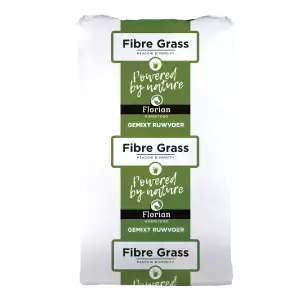
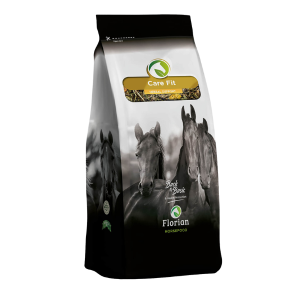
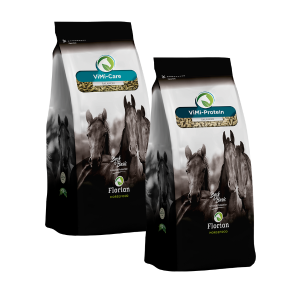
Within the Florian range, the philosophy behind a fiber-rich roughage base and a concentrated vitamin and mineral supplement fits particularly well. Not because every horse needs more, but because grass does not automatically equate to a complete diet.
A horse that thrives on grass usually doesn’t need a spectacular schedule, but it does require consistent management. Give the gut time, keep roughage as the foundation, and always look at the big picture: season, horse type, condition, manure, and behavior. That isn’t complicated, but it is important.
Do you want to put your horse back on the grass without the hassle? Then stick to these basics:
This way, you turn grazing from a risk into a valuable part of a healthy horse life.
That varies from horse to horse, but the transition to fresh grass always takes time. As an average, we assume that the digestive system may need 6 to 8 weeks to adapt to new food, and this applies to grass as well.
Yes, that is usually a sensible choice. A well-filled digestive system helps to digest more calmly, which means your horse is less likely to be bothered by fructans in the grass.
Not necessarily. However, spring grass can be rich in fructans, especially after cold nights and during vigorous growth. That is why building up gradually is particularly important during that period.
Particularly frugal horses, overweight horses, horses with a sensitive metabolism, and horses with a history of laminitis require special management.
Grass is valuable, but not always complete. Pasture horses can still have deficiencies in certain vitamins and minerals. Therefore, a balancer can be a logical supplement.
Watch out for fluctuating droppings, restlessness, a bloated belly, rapid weight gain, or sensitivity while walking. If you notice a change, it is better to scale back than to continue according to plan.
Are you curious how Florian fits into sound management, even during the grazing season? Or do you simply need some personal advice?
Start with the FeedCheck Or choose directly for Nutritional advice. Then we’ll look with you at roughage, pasture, concentrate and the details that can make a difference with your horse.
Discount Applied Successfully!
Your savings have been added to the cart.